Services
Our long-list of SMEs able to help building fulfilling specialized strategies, keen to reach ambitious objectives toward future steps.
We help organizations to build their roadmaps and absorb the key formulas to ensure sustainable adoption for future technologies.
We help understanding the existing gaps and eager to build aggressive transformational programs within the available resources.
Implementing Quality Standards
We help implementing wide-rang of ISOs linked to core business, ensuring the continuous improvements practices in place.
Building comprehensive 360 service design methodologies ensure seamless, integrated, customized and proactive services.
Our rich and up-to-date database and continuous studies help business to get close look at best international practices.
We help organizations to Strategically Align with Pioneering Excellence Models requirements and adopt the excellence culture.
We Support Organizations in preparing their capabilities, results and submission for International Excellence Awards.
Enhancing Customer Experience (CX)
We help enhancing customer experience by implementing world-class CX models articulates business value propositions.
We help building business Policies, frameworks, processes, SOPs, KPIs to optimize business outputs effectively and efficiently.





We Deliver Specialized and Accredited In House Training for our Customers
We maintain a strong network of trusted training and certification bodies, enabling us to deliver high-quality, specialized training programs through our certified training partners.
In-house specialized training plays a crucial role in corporate learning and development, equipping employees with the targeted skills and knowledge required to perform their roles with greater effectiveness and efficiency. These programs are tailored to the specific needs, objectives, and operational context of each organization, ensuring maximum relevance and impact.
Training can be delivered in various formats—including classroom sessions, virtual learning, and on-the-job training—to accommodate different learning preferences and operational requirements. By investing in customized in-house training, organizations can drive performance, close competency gaps, and foster a culture of continuous improvement.
One of the key advantages of in-house training is its ability to be fully customized to address the specific needs and priorities of the organization. This targeted approach enables companies to focus on the precise skill gaps and development areas most relevant to their workforce, ensuring that training content is directly applicable to employees' daily responsibilities.
In addition to its relevance, in-house training is often more cost-effective than external programs, as it eliminates expenses related to travel, accommodation, and per diem costs. It also allows for more flexible scheduling, minimizes operational disruptions, and fosters team collaboration by enabling employees to learn together in their actual work environment
+60
Total of Specialized Training Programs
+23
Total of Soft Skills Training Programs
+2,000
Total Trainees Benefited from our training providers
In-house specialized training programs offer organizations a flexible and impactful way to develop their workforce and strengthen organizational capabilities. These programs can cover a wide spectrum of topics, including:
Technical skills
Leadership and management
Customer service excellence
Sales and marketing strategies
Health, safety, and compliance requirements
Training can be tailored for employees at all levels—from entry-level staff to senior executives—ensuring that development opportunities are aligned with role-specific needs and organizational priorities.
To design an effective in-house training program, it is essential to begin with a comprehensive training needs assessment. This may involve conducting surveys, interviews, or focus groups with employees, managers, and key stakeholders. Based on the findings, a targeted training plan is developed with clearly defined learning objectives, delivery methods (such as classroom sessions, online modules, or practical workshops), and evaluation criteria to measure outcomes and impact.
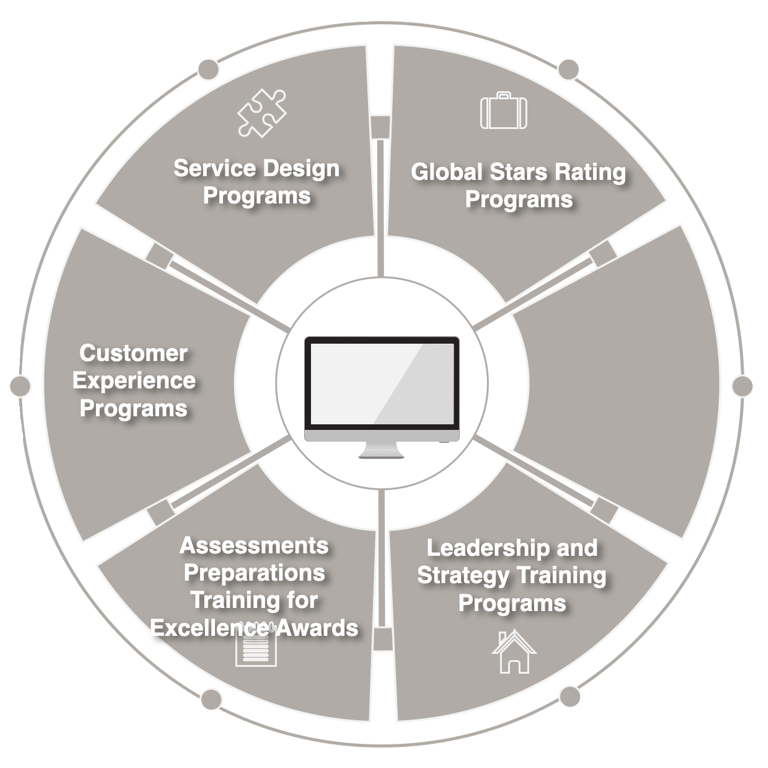
Our network of certified training providers ensures the highest quality of program delivery, while our solutions can also be supplemented with coaching and mentoring to provide personalized, one-on-one development support. These interventions help employees build confidence, overcome challenges, and achieve their professional goals.
Ultimately, in-house training is a strategic investment in human capital. By offering relevant, role-specific training, organizations can enhance employee competencies, boost productivity, and drive progress toward their broader business objectives.
Building Specialized Strategies
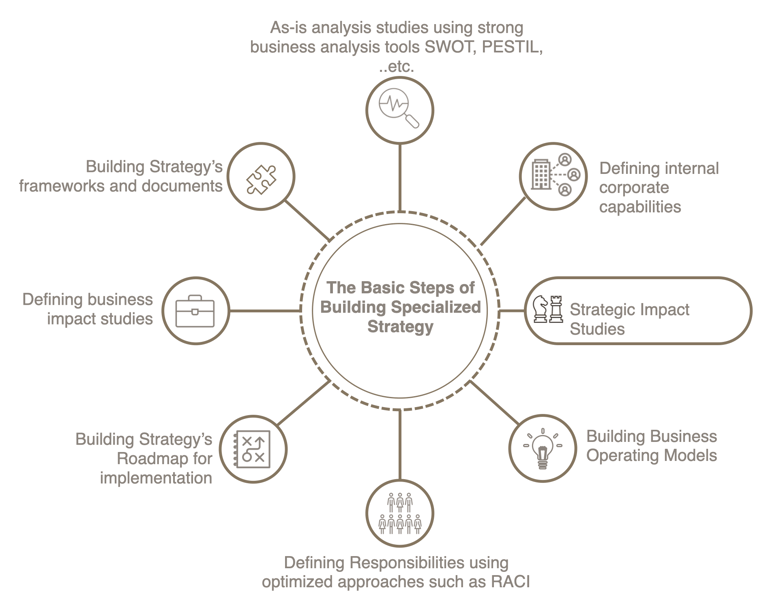
Building specialized strategies for corporates and organizations entails crafting a focused, results-oriented approach that aligns closely with the organization’s vision, goals, and strategic priorities. This process requires a structured methodology incorporating key components such as:
Comprehensive as-is assessment to understand the current state
Development of a tailored strategic framework
Active stakeholder engagement to ensure alignment and buy-in
Thorough risk assessment to identify and mitigate potential challenges
Clear implementation planning to guide execution
Robust monitoring and evaluation mechanisms to track progress and drive continuous improvement
This end-to-end approach ensures that the strategy is not only well-conceived but also actionable, sustainable, and impactful.
Adopting Futuristic Technologies
Identify Relevant Technologies
Assess Organizational Readiness
Develop an Implementation Plan
Stakeholder Engagement
Monitor and Evaluate


Transformational Programs
Define the Vision
Conduct a Baseline Assessment
Develop a Roadmap
Engage Stakeholders
Implement and Monitor


360 Service Design
Service design is a structured methodology that enables corporates and organizations to design, enhance, and optimize their services to deliver meaningful and engaging experiences for their customers. The primary objective of service design is to develop services that are intuitive, efficient, and impactful—addressing the needs and expectations of both end users and service providers. By taking a holistic, user-centered approach, service design ensures that every touchpoint within the service journey is aligned to create value, improve satisfaction, and drive operational excellence.


ٍService design plays a vital role in enabling corporates and organizations to deliver engaging and seamless customer experiences. To achieve this, companies must adopt a structured, customer-centric approach that includes:
Developing a comprehensive service blueprint
Mapping the customer journey across all stages
Identifying and optimizing key touchpoints
Fostering positive emotional interactions
Proactively addressing customer pain points
By placing the customer at the heart of the design process, organizations can enhance satisfaction, build trust, and cultivate long-term loyalty. Service design not only improves the quality and consistency of service delivery but also drives differentiation in competitive markets.
Service Blueprint
The service blueprint is a visual representation of the service delivery process that outlines the service's front-stage and back-stage components. Identify the touchpoints and interactions between the customers, service providers, and the critical moments in the service delivery process.
Customer Journey
The customer journey is the end-to-end experience that a customer has with the service. This journey includes all touchpoints and interactions, from the initial contact to the post-service follow-up.
Touchpoints
The touchpoints are the points of interaction between the customer and the service provider, such as phone calls, emails, online chat, and face-to-face meetings.
Customer Emotional Interaction
Customer emotional interaction is the emotional response that customers have when interacting with the service provider or using the service.
Customer Pain Points
Customer pain points are the areas in the service delivery process where customers experience frustration or dissatisfaction.
Providing Benchmarking Studies
Benchmarking studies of leading international practices are a critical element of effective corporate strategy for organizations aiming to enhance performance and maintain a competitive edge. These studies offer valuable insights into industry trends, enabling organizations to identify proven best practices that can be adapted to improve internal operations, efficiency, and service quality.
Benchmarking involves systematically comparing an organization’s processes, strategies, and outcomes against those of top-performing peers within the same industry or sector. The goal is to uncover performance gaps, identify opportunities for enhancement, and adopt successful approaches that drive continuous improvement and innovation.
Benchmarking studies can be conducted using a range of methodologies, depending on the objectives and scope of the assessment. Common approaches include surveys, interviews, and site visits, which provide qualitative and quantitative insights into peer practices and performance standards. Additionally, organizations can leverage benchmarking databases—including industry-specific repositories and publicly available datasets—to compare their performance metrics against those of leading organizations. These tools enable data-driven decision-making and support the identification of actionable opportunities for improvement
Adopting Excellence Models
Excellence models are structured frameworks that guide organizations in identifying best practices, enhancing performance, and achieving their strategic objectives. By adopting an excellence model, organizations can strengthen their competitive positioning, elevate customer satisfaction, and drive sustainable operational excellence.
One of the most widely recognized frameworks is the European Foundation for Quality Management (EFQM) Model, which is extensively used across Europe and globally. The EFQM model is built on a set of core principles, including:
Customer Focus
Visionary and Inspirational Leadership
People Development and Engagement
Effective Process and Performance Management
Continuous Learning, Innovation, and Improvement
Corporate Social Responsibility and Sustainability
Our consultancy typically begins the engagement by conducting a comprehensive assessment of the organization’s current performance. This may involve stakeholder interviews, employee surveys, and in-depth data analysis to establish a clear performance baseline.
Following the assessment, we develop a tailored excellence roadmap, which outlines strategic actions such as training programs, process enhancements, capability development, and change management initiatives.
We then collaborate closely with the organization to implement the roadmap, offering continuous support through coaching, structured workshops, and targeted interventions. Progress is closely monitored to ensure consistent improvement across the key categories of the selected excellence model, enabling the organization to move toward institutional excellence and global recognition.
Adopting an excellence model offers organizations a wide range of strategic benefits, including enhanced customer satisfaction, higher levels of employee engagement, and improved operational efficiency. These frameworks provide a structured path for continuous improvement and performance excellence across all areas of the organization.
Partnering with a consultancy management firm brings added value to this journey. With deep expertise in excellence frameworks and implementation strategies, consultants guide organizations through every stage of adoption—from assessment and planning to execution and monitoring—ensuring alignment with strategic goals and positioning the organization for long-term success and competitive advantage.
Global Stars Rating Program
Helping Customer Service Centers To Pioneer In Customer Service




Dubai Government Excellence Program
Helping government entities to adopt 4th generation excellence practices
360 Services Vision
Helping Organizations to develop Seamless, Integrated, Customized & Proactive Services
EFQM Global Award
To recognize outstanding organizations worldwide, demonstrate an indisputable track record of success
International Excellence Awards
We help businesses to step on the stage for international and regional excellence awards
SKEA Excellence Award
to World Class Organizations of their World Class levels of Leading Performance in all aspects
International Customer
Experience Institute
Help achieving the International Customer Experience, delivering structured, measured & effective Approach
Stevie® Award Programs
Achieving world's premier business awards with eight Stevie Awards programs, each with its own focus, list of categories
The Global Best M-Gov Award
Achieving pioneering development and innovative solutions using the latest technologies as part of the World Government Summit
International Customer Experience Awards™
Achieving the International CX Awards representing the world's biggest CX community
Dubai Award for Sustainable Transport
Achieving pioneering City in Sustainable Transport across entire MENA region this award designed by RTA in collaboration with UITP
Enhancing Customer Experience (CX)
Customer Experience (CX) is a vital pillar of corporate strategy for organizations aiming to foster customer loyalty, enhance brand reputation, and drive sustainable revenue growth. CX refers to the overall perception customers have of an organization based on every interaction across products, services, and channels.
To deliver exceptional experiences, organizations must adopt a customer-centric approach, placing the customer at the core of all strategic and operational decisions. This involves:
Gaining deep insight into customer needs, expectations, and behaviors.
Leveraging technology and data analytics to personalize experiences and streamline interactions.
Investing in employee training and empowerment to ensure frontline teams deliver with empathy and efficiency.
Continuously improving processes to remove friction and enhance satisfaction across all touchpoints.
One of the most effective tools for improving CX is Customer Journey Mapping. This technique visualizes the end-to-end customer experience—from initial contact to post-purchase engagement—allowing organizations to:
Identify critical pain points and moments of friction.
Discover opportunities for improvement and innovation.
Align internal processes and resources with the customer’s expectations.
Foster consistent and memorable interactions that build loyalty.
By prioritizing customer experience as a strategic objective, organizations can differentiate themselves in increasingly competitive markets, improve retention, and achieve long-term business success.
Corporate Documentation
Developing corporate documentation—including policies, processes, and standard operating procedures (SOPs)—is essential for fostering consistency, accountability, and operational efficiency within an organization. These documents serve as foundational tools that guide employee behavior, support decision-making, and ensure alignment with organizational goals.
Policies
Policies are high-level, strategic documents that articulate the organization’s stance and guiding principles on key topics such as human resources, information security, compliance, or health and safety. They establish clear rules and expectations, providing a unified framework to ensure that all employees operate in alignment with the organization’s values and objectives.
Processes
Processes define the sequence of steps required to complete a specific business function. They provide structured instructions for routine tasks, highlighting inputs, decision points, responsibilities, and workflows. Processes are often visualized through flowcharts or process maps to enhance clarity and usability across teams.
Standard Operating Procedures (SOPs)
SOPs offer detailed, task-specific instructions designed to ensure consistency in execution. They serve as practical tools for onboarding new employees, maintaining quality standards, and ensuring compliance with best practices. SOPs are particularly valuable in operational, technical, and regulatory environments where precision and uniformity are critical.
By establishing clear and accessible documentation, organizations can reduce ambiguity, improve performance, mitigate risk, and enhance overall governance. Our consulting team supports clients in developing robust, user-friendly documentation tailored to their unique operational context and industry standards.
Corporate documents also encompass key human capital tools such as job descriptions, performance evaluation criteria, and training materials—all of which play a vital role in aligning individual performance with organizational goals.
Want to work together and achieve high results? Let’s talk.